
Resilience - why it matters, how to learn it, and what it has to do with Dame Arlene Phillips
A while ago I was lucky enough to interview the legendary choreographer and director Dame Arlene Phillips. Amongst the many fascinating things she talked about and the stories she told about her incredible career (what stories! Including how an Oscar-nominated director was responsible for the start of her life as a dancer. And how a chance opportunity to learn a new skill on her first film led to one of her most ground-breaking and successful shows. You can watch the whole interview via the link at the end), she shared the strategy she’s developed over her long life to deal with the inevitable set-backs and rejections in the life of a performer.

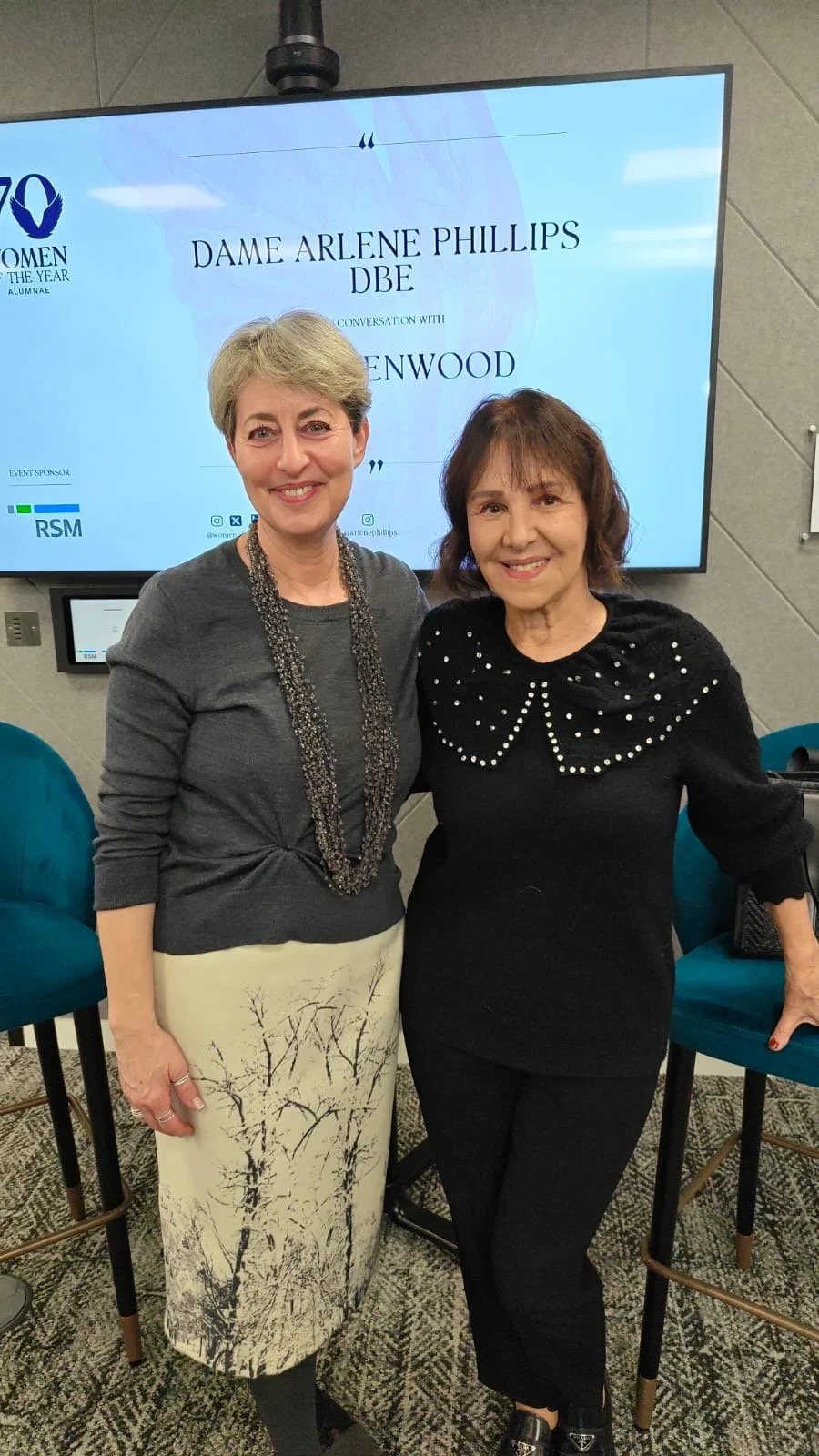
Pics from my conversation with Dame Arlene Phillips for Women of the Year
I give myself 48 hours to scream and rail against the unfairness of whatever’s happened, she said. Then I make myself stop, get back and start again. This hard-learned resilience technique has seen Arlene through some very tough times, arguably few more difficult than her very public and appallingly handled dismissal from Strictly Come Dancing (which she revealed she only discovered when the presenter of a radio show rang her on air to ask how she felt about it. Shockingly, to this day no-one from the BBC has ever directly apologised to her).
Aside from being in awe of Arlene’s remarkable youthfulness and still un-dimmed passion for dance at the frankly unbelievable age of 83, our conversation set me thinking about the whole topic of resilience - why it matters, what it means and how you acquire it.
Resilience is one of those things we’re so often told is important. A key tool for successfully navigating life’s challenges and setbacks. But it seems to me most of us don’t set out to learn resilience. It’s something, if we’re fortunate, and maybe focused, enough, we acquire through the knocks of life - surprise, disappointment, loss, frustration, disillusionment. Like a skin that hardens over a scar, protecting us from being hurt again.
And here’s the thing. When we’re older, we’ve probably already acquired more resilience than we realise by simple dint of having lived as long as we have. Having said which, that resilience has almost certainly changed as we’ve aged.
In our younger years our resilience is fuelled by energy, optimism and possibility. If we encounter a set-back we bounce back quickly. We fall, we bruise, we get up - not without help of course, but with plenty of optimism. We feel confident about the chances for life to right itself, and for other opportunities to come our way.
In midlife, our resilience is shaped by our responsibilities and experiences. We are wiser and stronger because of the life we have already lived. At this stage, resilience is less about bouncing and more about balancing. Holding steady. Adjusting expectations without giving up hope.
In later years, our resilience is something that’s become deeper and calmer, underpinned by wisdom, perspective and endurance. We know life never goes entirely according to plan and that it is possible to survive the stuff that goes wrong and hurts us. That pain will pass as it has before and we will find a way to move forward with acceptance. We understand that strength doesn’t always roar. Sometimes it sighs, rests and carries on in spite of what we experience.
For me, the most powerful shift in resilience that I find I’m acquiring as I’ve got older is not to always ask ‘how can I fix this as quickly as possible?’ (though that does still tend to be my default reaction) but more allowing myself to consider the question ‘how do I manage to find a way to live comfortably alongside this?’
Having said that resilience is something very few of us set out to deliberately learn, there are definitely things we can do to strengthen it, that help us to cope when we inevitably hit the next bump in the road.
1. Stay connected.
Resilience is always bolstered through the support of others. A partner, a sibling, a trusted friend. Talking, sharing, or just being with people whose company we value, reminds us we don’t have to carry everything - or indeed, anything - alone.
2. Be as open as you can to change
It’s rare for life to follow the plan or path we imagined. Resilience grows when we allow our story to change with as little resistance as we can muster or the self-inflicted belief that the different version is somehow a failure. Kindness to ourselves is as important as kindness to others.
3. Take care of your body.
Sleep, movement, eating well, and time outside aren’t luxuries. They’re quite literally emotional shock absorbers. Your self-kindness should be physical as well as emotional.
4. Let yourself feel what you feel.
Arlene’s approach is the perfect example of this. Resilience isn’t about pretending everything is fine - to yourself or others. It’s about the allowing the feelings you have - the grief, anger, fear, or disappointment - to have their time, whilst being mindful of not letting them take over permanently.
5. Remember what you’ve already survived.
Keep reminding yourself that you’ve been through hard things before. You adapted. You learned. You’ve coped. You’ve carried on. You’re still here. That is resilience in hard-learned practice.
Goodness knows, life doesn’t get simpler as we age, does it? Our roles shift. Our bodies change. Our days get lumpy and bumpy without warning. People we love face illness or worse. The world….well, the less said about that, probably the better. Resilience doesn’t stop any of those things from happening. But it does help us meet the challenges with steadiness rather than panic. Calmness instead of despair. And enough courage to face them head on.
Resilience, it seems to me, isn’t about becoming unbreakable. That’s never going to be possible. It’s about being better at being bendable, more accepting and compassionate to yourself, and at finding your feet again after the set-backs.
You can see all of my conversation with Dame Arlene Phillips HERE
Other posts you’ll enjoy
The power of doing things a bit differently