
Six fun things to do in Bristol
In 2024, Bristol was the place ranked as the happiest city in the country. It’s been named as one of the best European cities to visit by the Independent (as well as the top city to live in according to the Sunday Times Best Places to Live Guide) and has been crowned the best UK culinary destination in the World Food Travel Association Food Trekking Awards. So a visit there is never going to disappoint.
And it certainly didn’t when I spent three days staying in Clifton, just to the west of the city centre, with the fabulous group of women I first became friends with at school - so roughly a million years ago. You can read about them HERE
Should you ever be in the area, or planning a trip of your own to this happy, buzzy, tasty city, here are six fun things we did that you might want to consider adding to your itinerary. And a truly sensational restaurant that you definitely mustn’t miss.
THE CLIFTON SUSPENSION BRIDGE, CAMERA OBSCURA AND CAVES
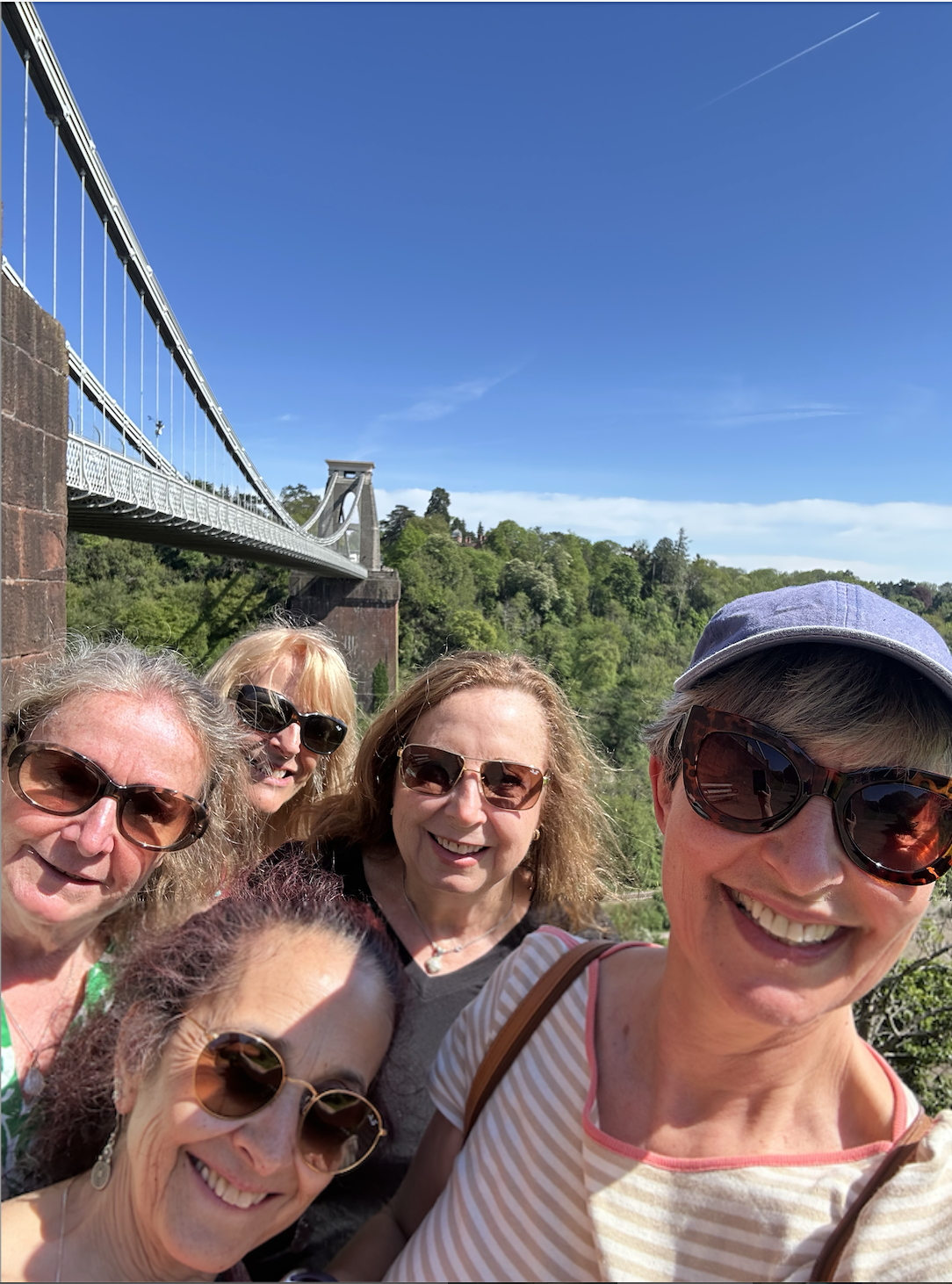
The Clifton Suspension Bridge spanning the Avon Gorge, with friends spanning decades.
Hardly original, I know, to suggest you head to one of Bristol’s most recognisable and famous landmarks. The Clifton Suspension Bridge was designed by, then 33 year old, Isambard Kingdom Brunel, and its construction marked a turning point in the history of engineering. The bridge took three decades to complete, and is one of the oldest surviving iron suspension bridges in the world.
Once you’ve admired this feat of engineering from ground level, head up the hill overlooking it and make your way to this building
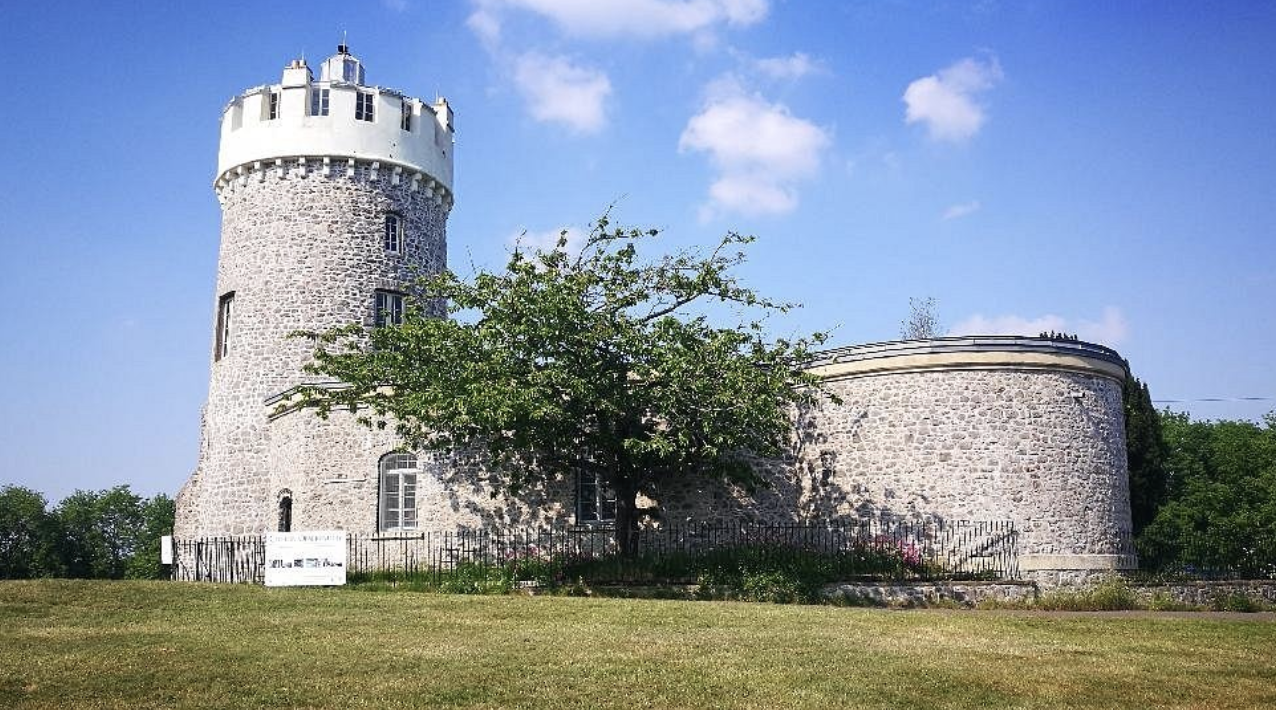
Clifton Observatory
where you’ll not only will you be rewarded with the most spectacular views of the bridge and the Avon Gorge it spans from its observation terrace, you’ll also be able to look at it through one of the oldest working camera obscuras in the UK, which was first installed in 1892.
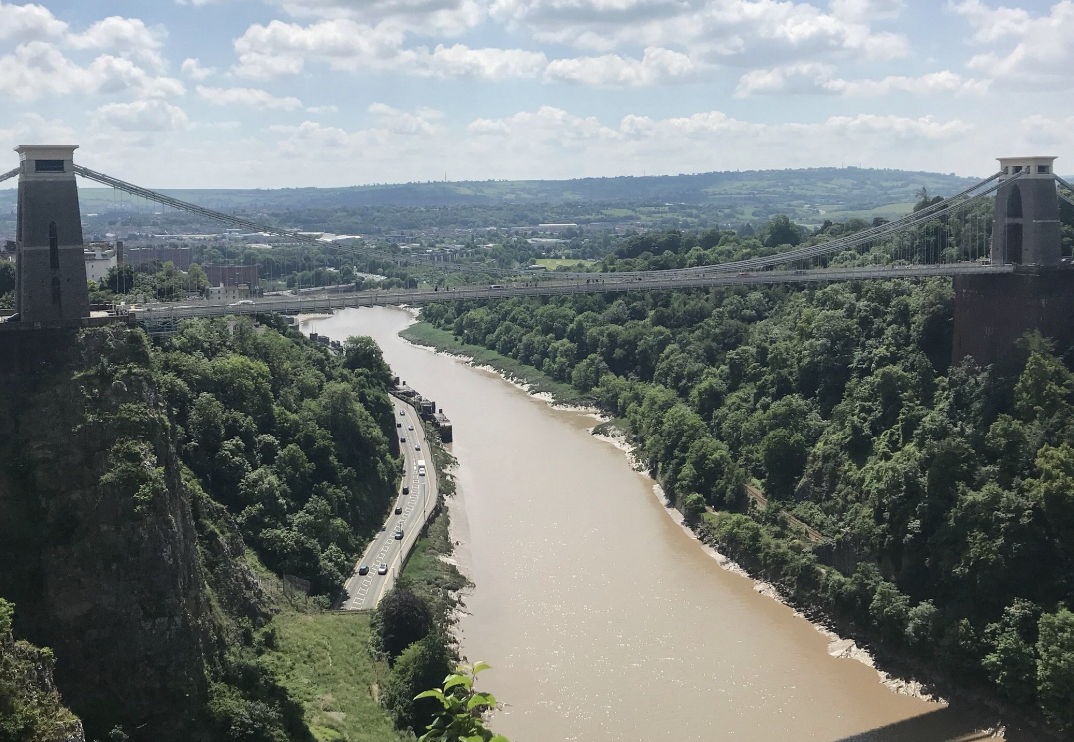
Clifton Suspension Bridge viewed from the Clifton Observatory
Having been above and at ground level, now’s your chance to plunge below ground. Because along with your entry ticket to the observatory you can also add the opportunity to clamber 200 feet down the steep narrow steps and stairs to the Giant’s Cave, which dates back to 305 AD (tickets can be purchased separately for both, or together).
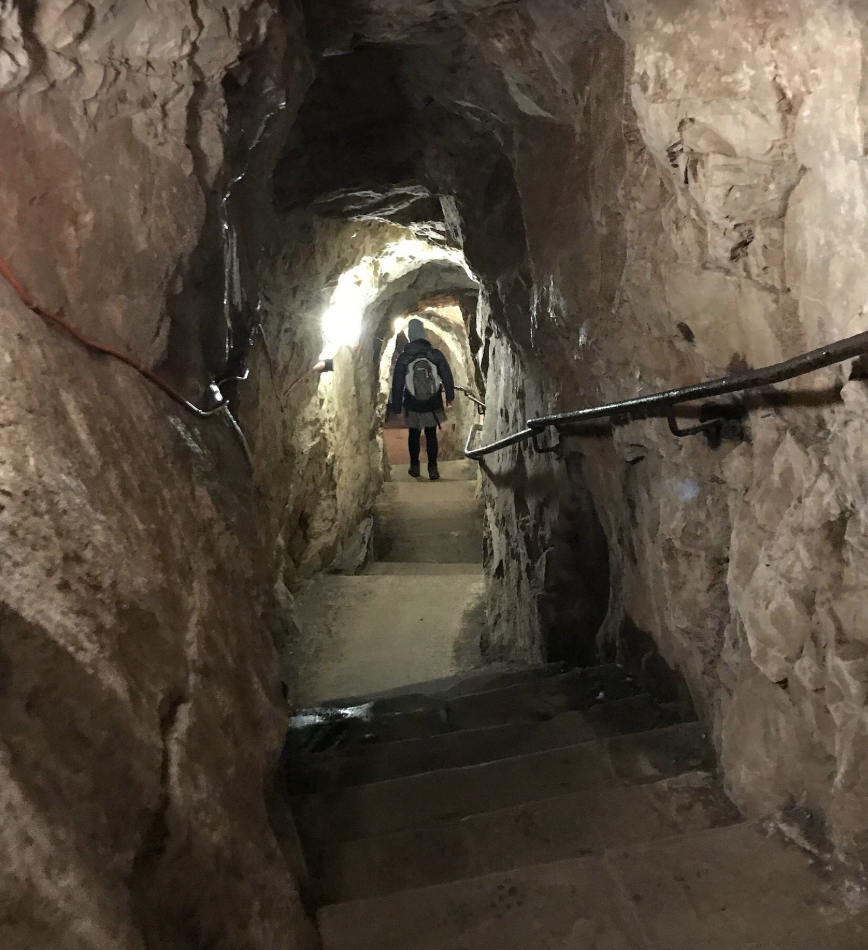
Descending the stairs in the Giant’s Cave
It’s quite an adventure with sections where you have to bend down in order not to hit your head on the tunnel roof (hence the hard hats you have to wear), but all very safe and manageable and you’re rewarded when you emerge with yet another elevated view of the river, gorge and bridge (maybe don’t venture to the edge of the platform with it’s open grill floor if you’re a bit iffy with heights).
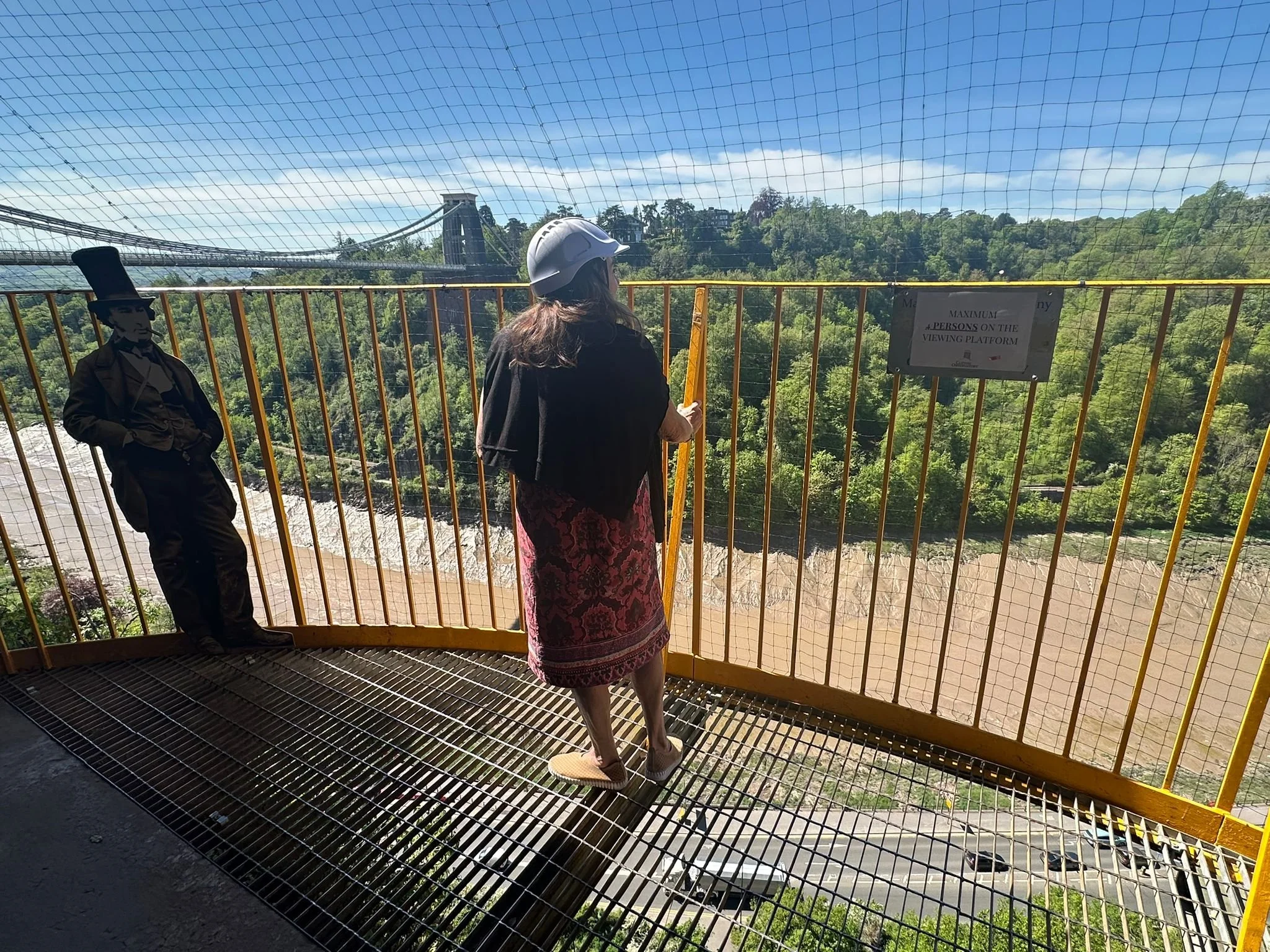
The viewing platform at the bottom of the Giant’s Cave
Find opening hours and ticket information HERE
ROYAL CRESCENT and THE PARAGON
Another well known spot for visitors is this Grade II listed Georgian terrace of 46 houses overlooking the city and the beautiful Royal York Crescent Gardens. Construction started on them in 1791, but it was another 30 years before the whole terrace, reputed to be the longest in Europe at 390 metres, was finished.
The elegant houses sit above a raised walkway over vaulted cellars and for me, the most interesting thing was to see what the different home owners have done with their small courtyard gardens which you can look into from above. It’s amazing how creative you can be with such limited space.
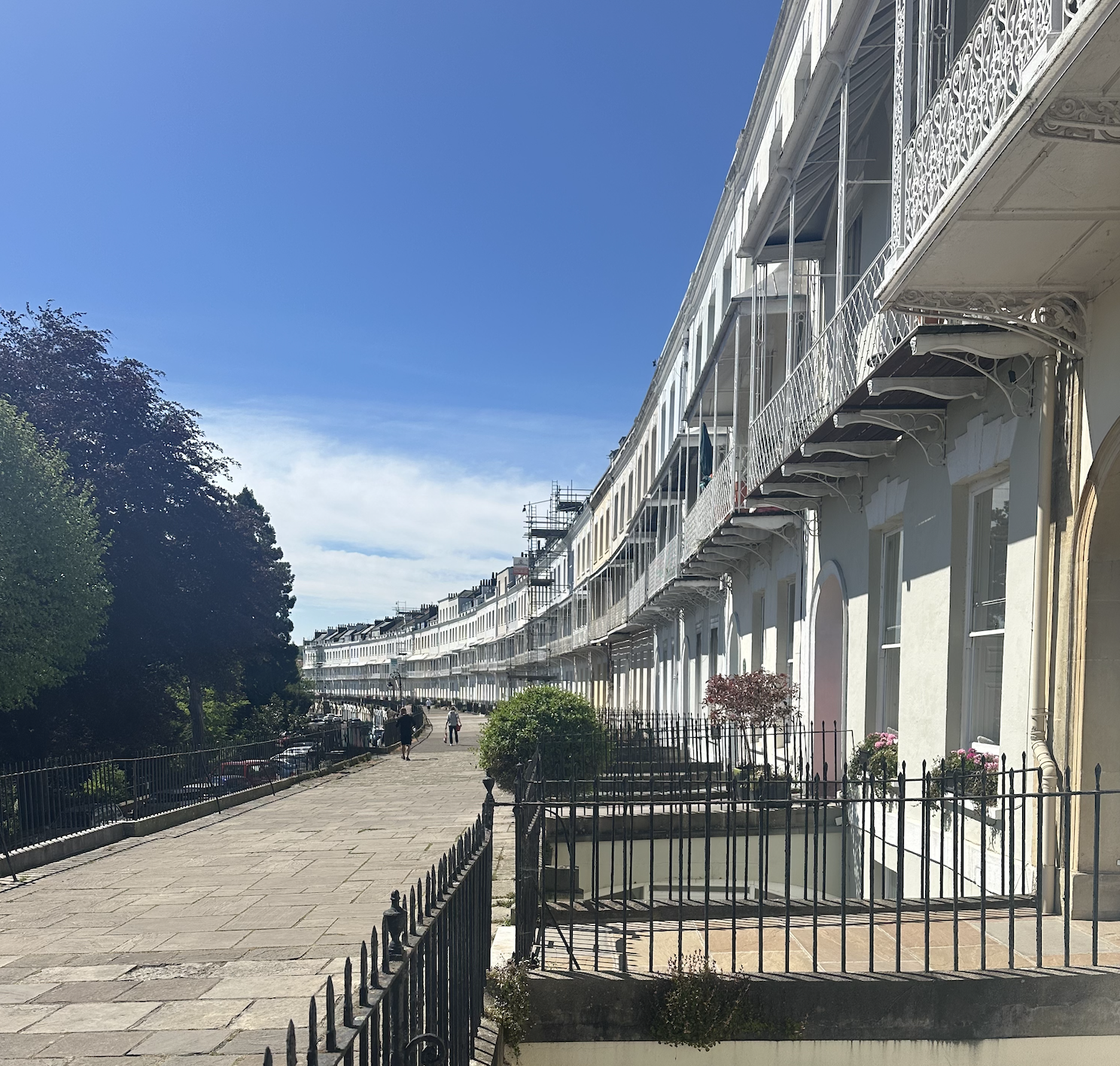
Royal Crescent in Bristol
Royal Crescent isn’t the only street worth visiting in this spot though, because at one end is a small dead-end road called The Paragon which I would argue is even more beautiful.
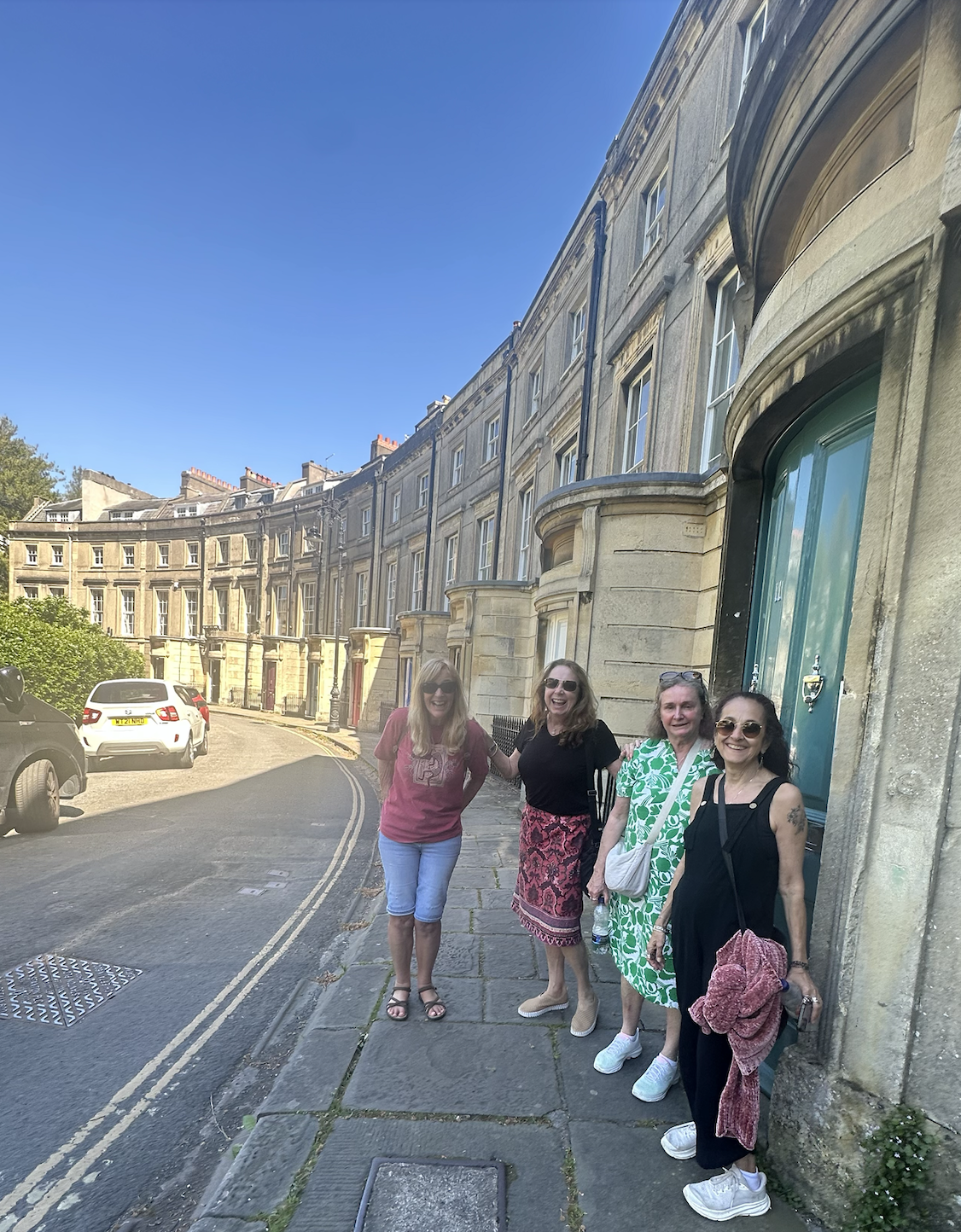
The Paragon, an arguably even more beautiful curved terrace of houses
Same curved layout but these dozen handsome houses, which overlook their own little haven of a resident’s garden, are built of honey-coloured stone with the rounded theme extended to their entrances each of which is accessed via impeccably crafted curved front doors.
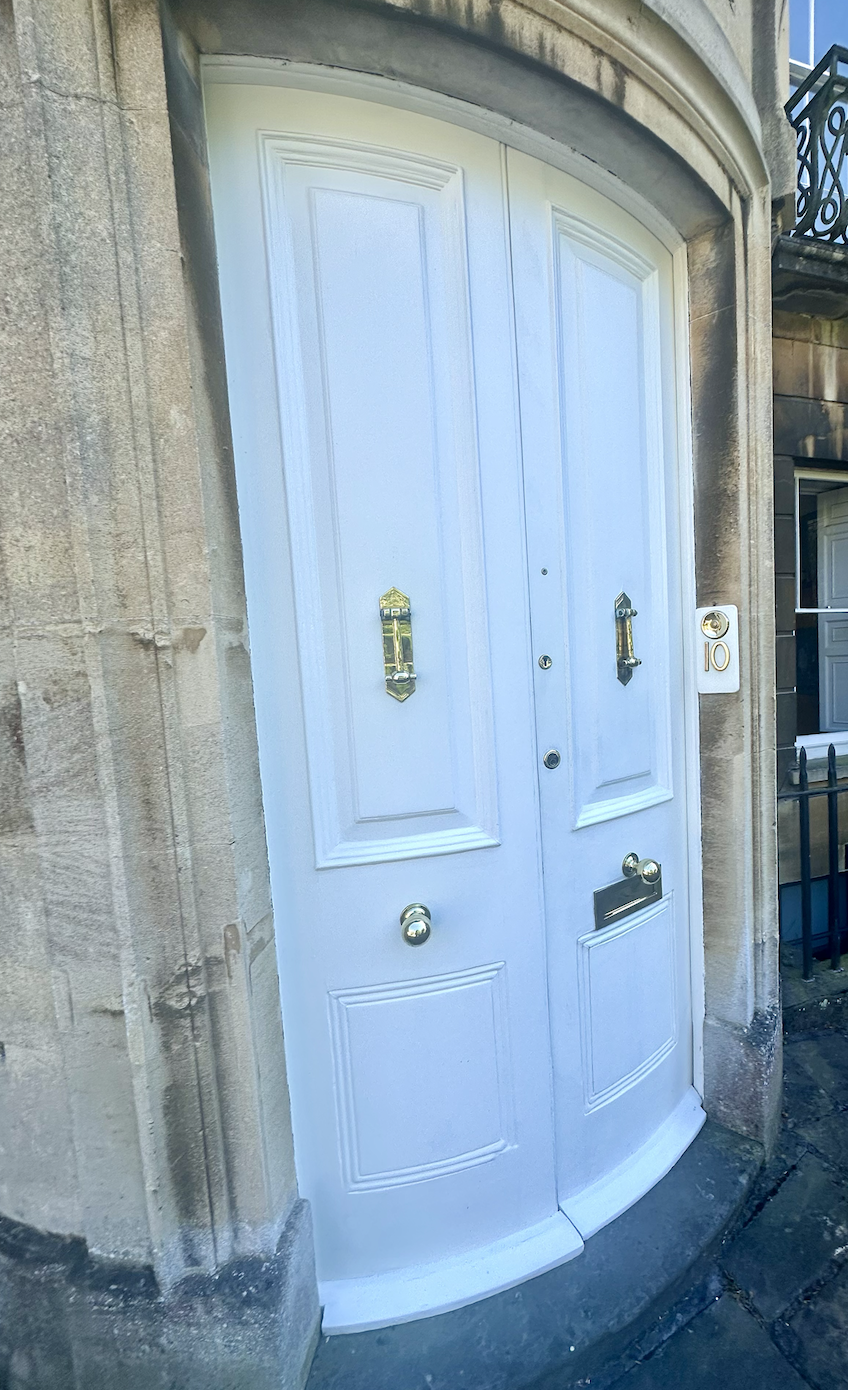
The doors on the houses in The Paragon are perfectly curved to match the buildings
BIRDCAGE WALK AND ST ANDREW’S CEMETERY
For about 800 years, St Andrew’s Church towered over the Clifton landscape. The original Norman church first appears in the records in 1154 and it was rebuilt twice before being destroyed by the Luftwaffe in November 1940, during the Bristol Blitz.
Now all that remains are the church’s graveyards, beautifully maintained with the perfect level of overgrown dereliction which allows access to the ancient gravestones and memorials to the residents of the area from the 1820s to the end of the nineteenth century, during which time it transformed from a fashionable health resort into a prosperous suburb.
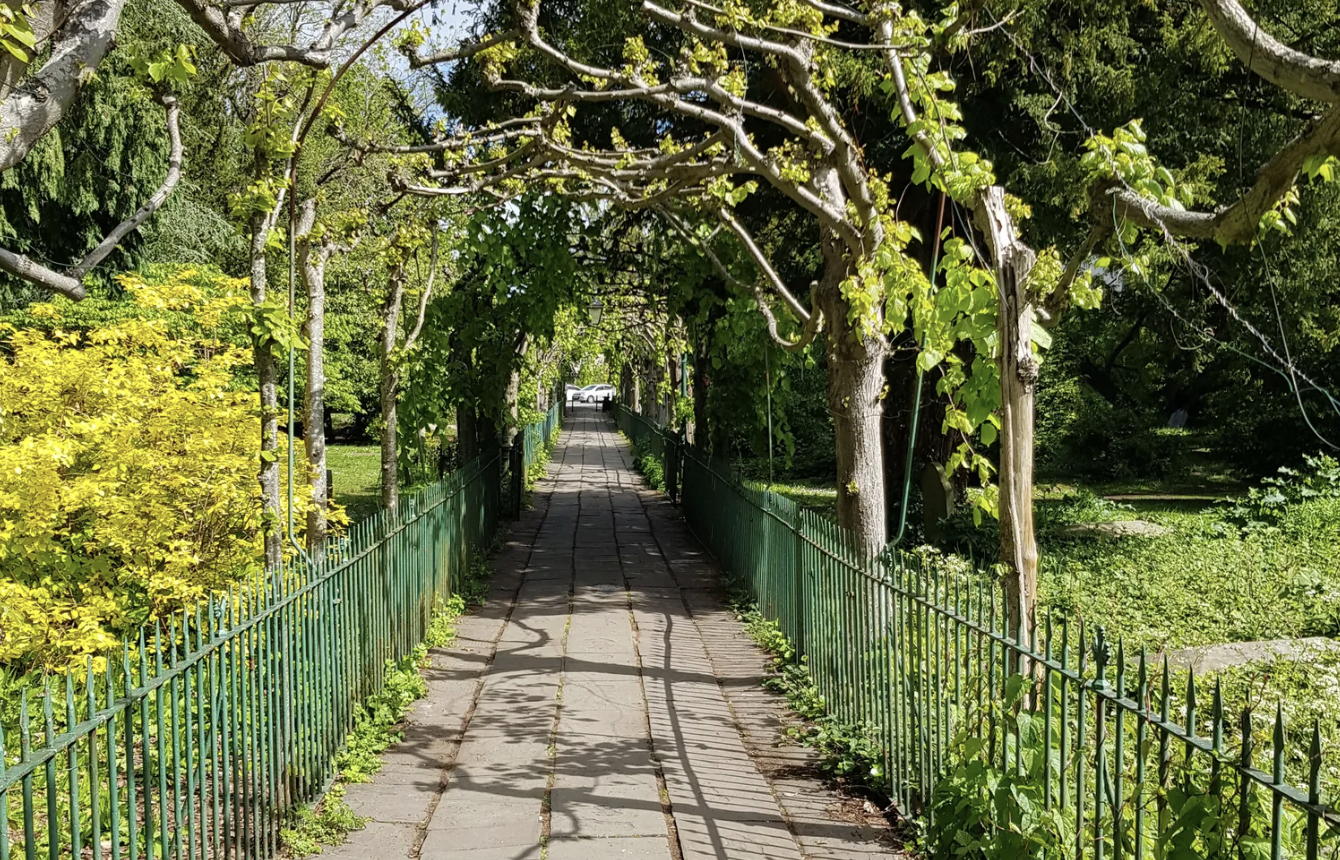
Birdcage Walk leading to St Andrews churchyard
The churchyard is accessed via a gorgeous pathway lined with arches of pleached lime trees and there are a couple of delightful open grassy areas on each side at one end where you can sit and enjoy the peace of this special spot.
STREET ART WALKING TOUR
Probably Bristol’s greatest claim to art fame is that it’s the home of the world-renowned, secretive graffiti artist Banksy, so naturally his work, which appears on walls and buildings around the town centre, features heavily in this enjoyable and informative two-hour walking tour.
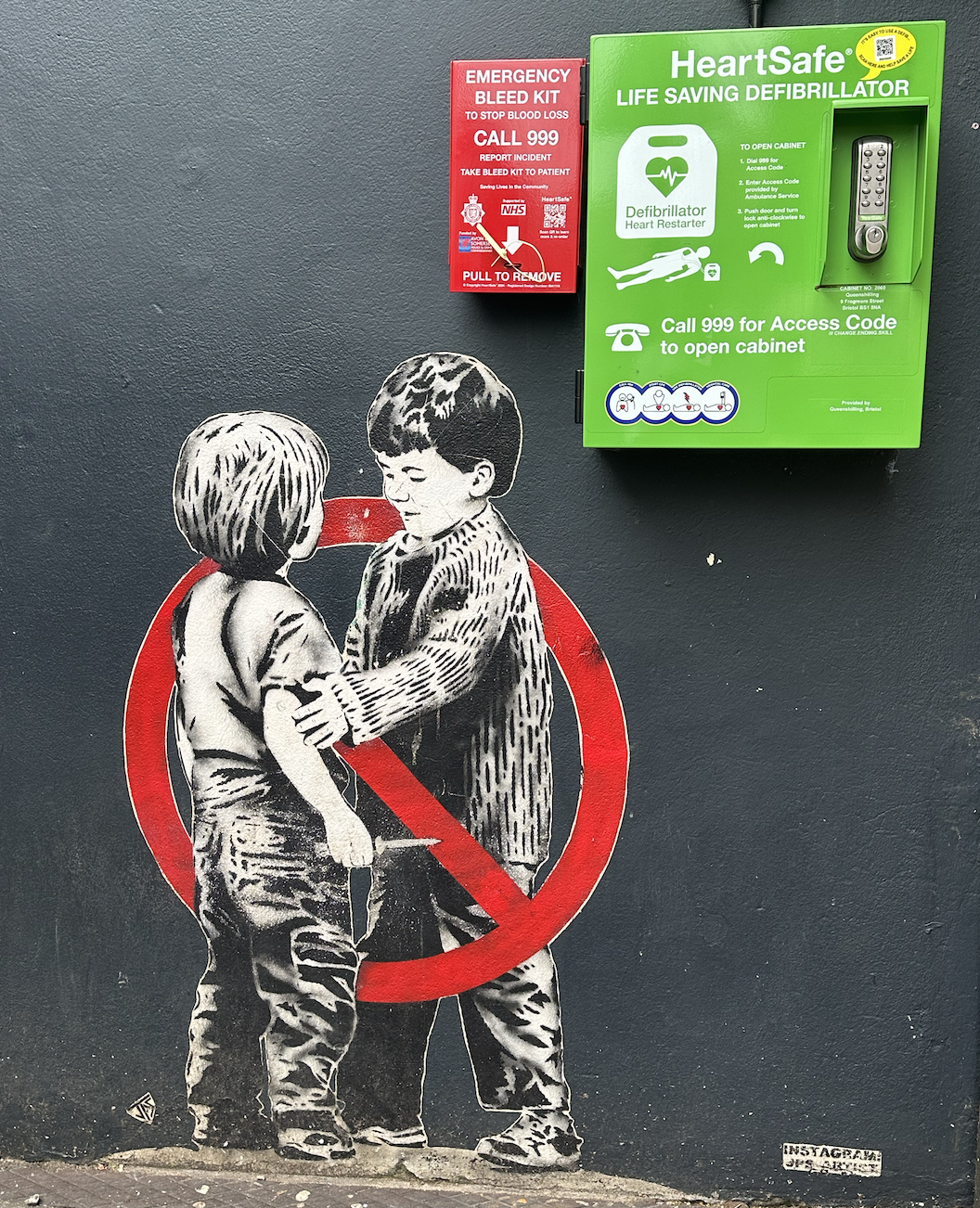
A Banksy work on a building in Bristol
But there’s lots else besides to discover and learn about the artists and architects whose creations help make Bristol such a vibrant place, and the city’s origins from its medieval centre to it’s historic harbour.
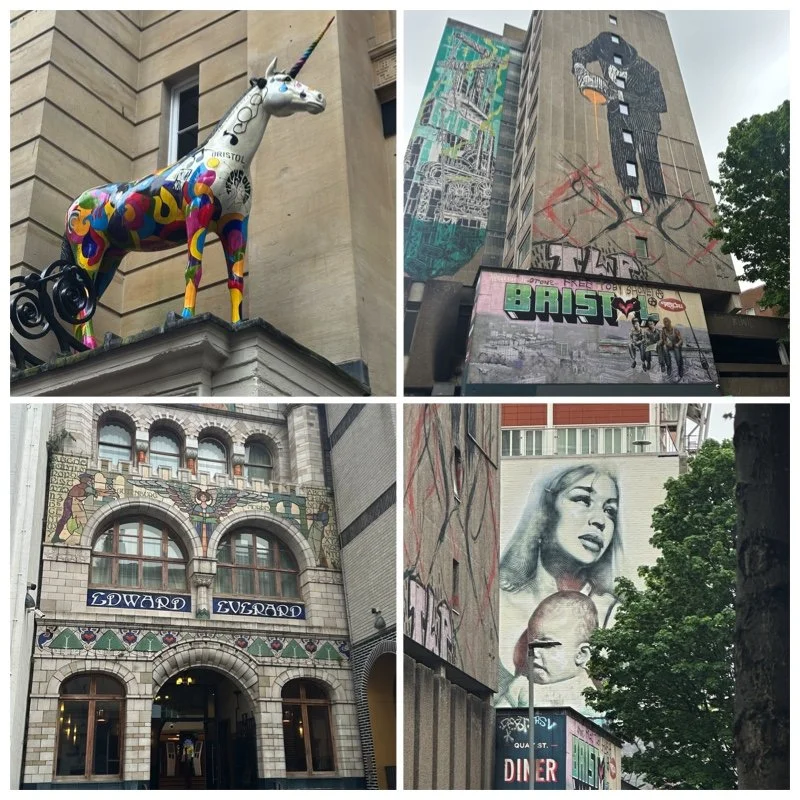
Street art , sculpture and beautiful buildings in downtown Bristol
Book the Blackbeard to Banksy Guided Walking Tour HERE
BRISTOL CATHEDRAL
The guided walk begins outside Bristol Cathedral a building that’s worth visiting whether you’re doing a tour or not. Not just because of its impressive medieval exterior and soaring Gothic revival nave, but to admire it’s highly unusual, and much more historically recent, collection of stained glass windows.
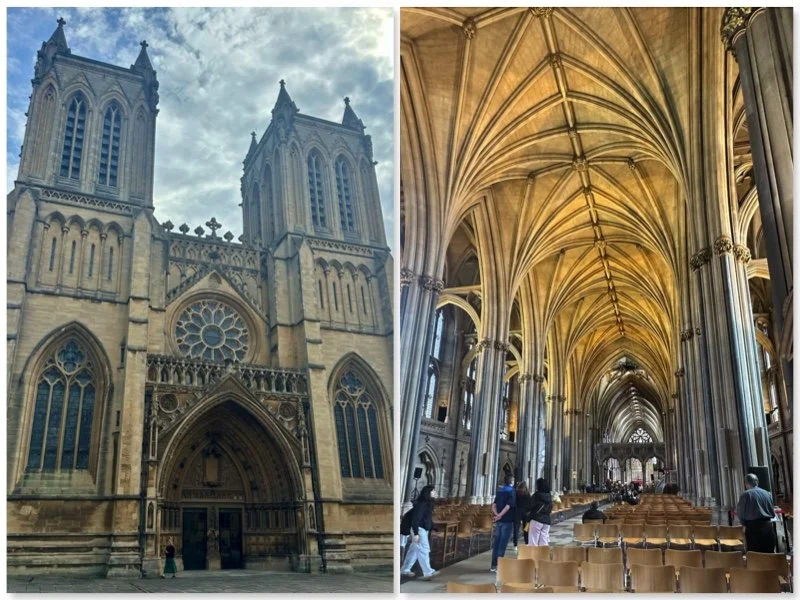
Bristol Cathedral, outside and in
You think of stained glass windows in somewhere like a cathedral a) being ancient and b) having religious themes, don’t you? So it comes as both a surprise and a delight to discover that when the original (very old, and yes, religiously themed) windows were blown out in an air raid in 1941, the then Dean wanted the replacements to honour the people who had protected the city during the darkest days of his history.
In response to the brief, artist Arnold Wathen Robinson created a set of remarkable, poignant windows, all based on real individuals, which commemorate the efforts of Bristol’s civil defence, fire service, British Red Cross, and other key wartime groups. The first one of Robinson’s designs was unveiled in January 1950 and through them he has created a memorable tribute to the courage and resilience of Bristolians during World War II.
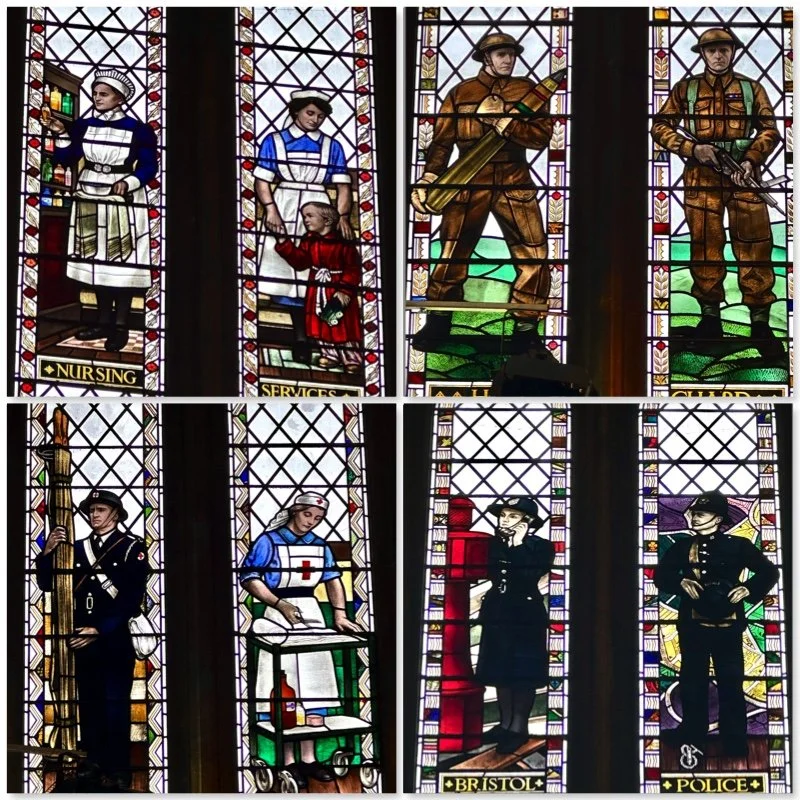
Stained glass windows in Bristol Cathedral commemorating the efforts of the local population during World War Two
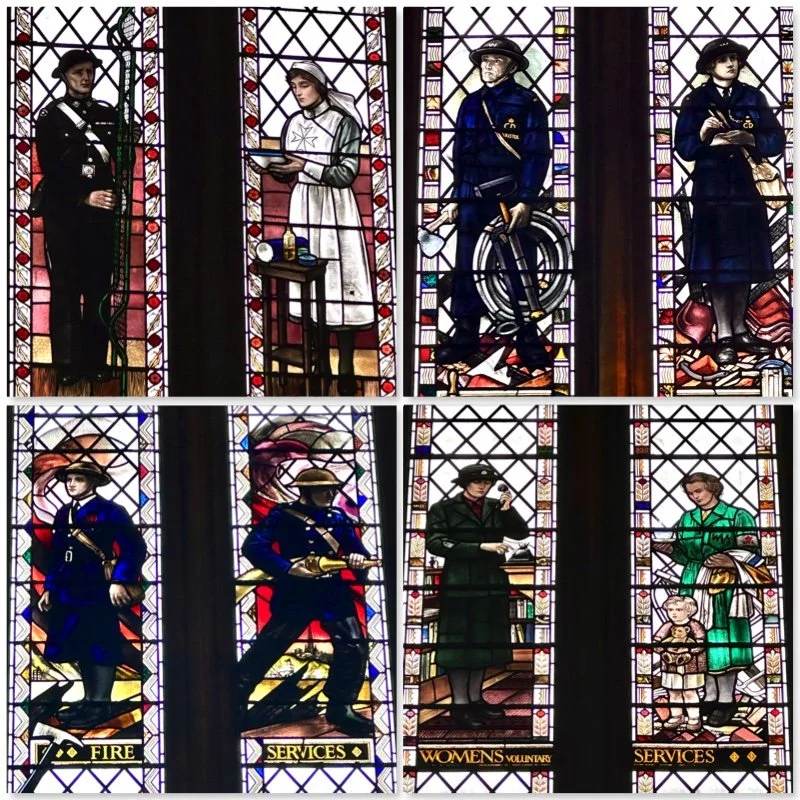
The windows are in the north nave of Bristol Cathedral
BRISTOL LIDO
Down a small side alley, through an inconspicuous entrance and hemmed in by buildings on all sides you’ll find this magical gem of an oasis. Bristol Lido is a restored Victorian swimming pool - the original swimming baths opened its doors for the first time in 1850 - which has been brought to new life and become one of the city’s best loved not-so-secret spots.
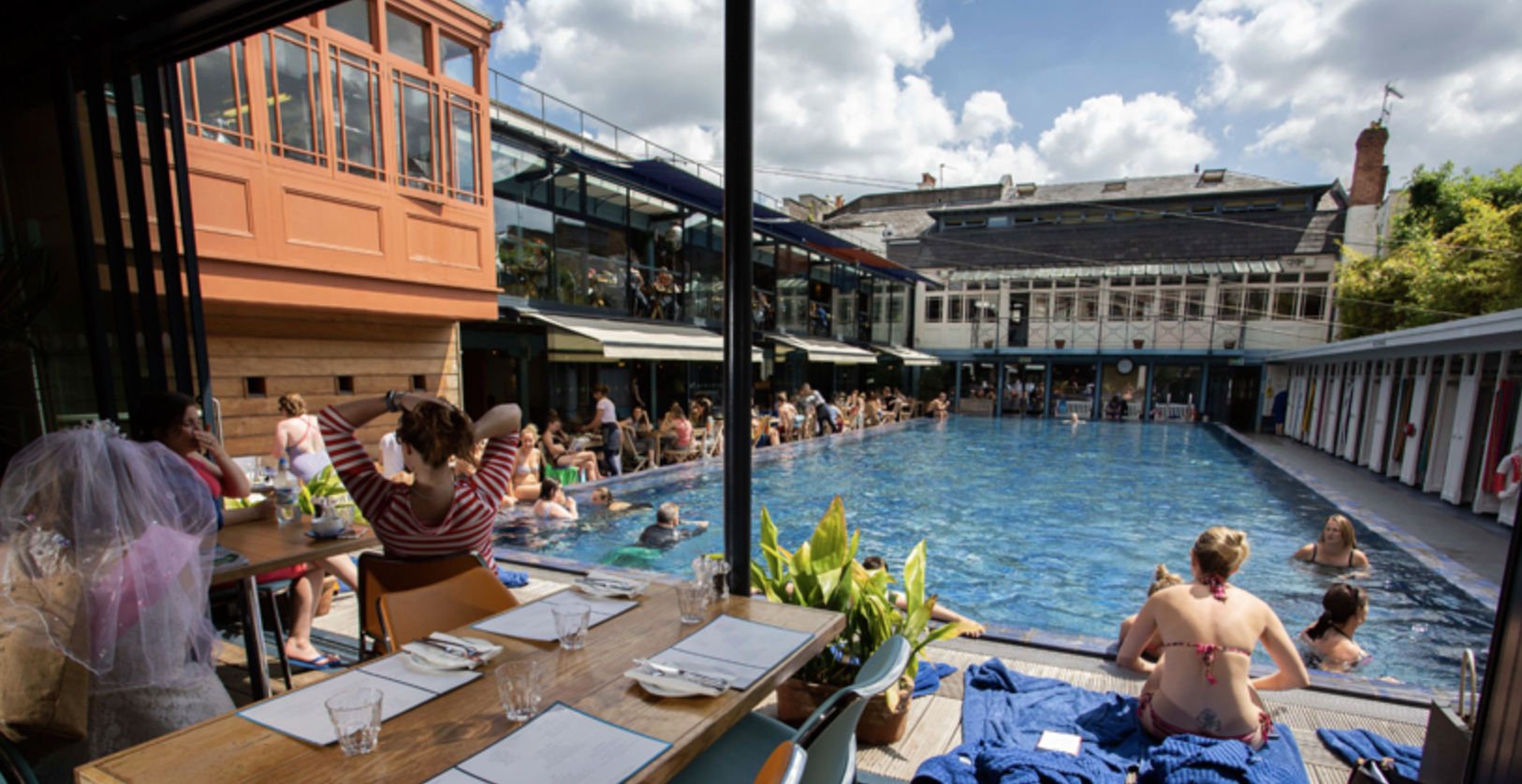
I honestly can’t think of anywhere better to be on a sunny day (or even a not-so-sunny one) enjoying a dip in the pool, chilling in the hot tub, sauna or steam room and eating at their fabulous restaurant. Do NOT visit Bristol without going here!
Unsurprisingly it does get very busy at times, so book your slot in advance HERE
As for that not-to-be-missed culinary experience I wrote about at the beginning (remember that far back?). That was one of the more memorable meals I’ve eaten which we had inside this former shipping container now converted into a bijou restaurant called Lapin and serving quite the most ridiculously delicious French food.
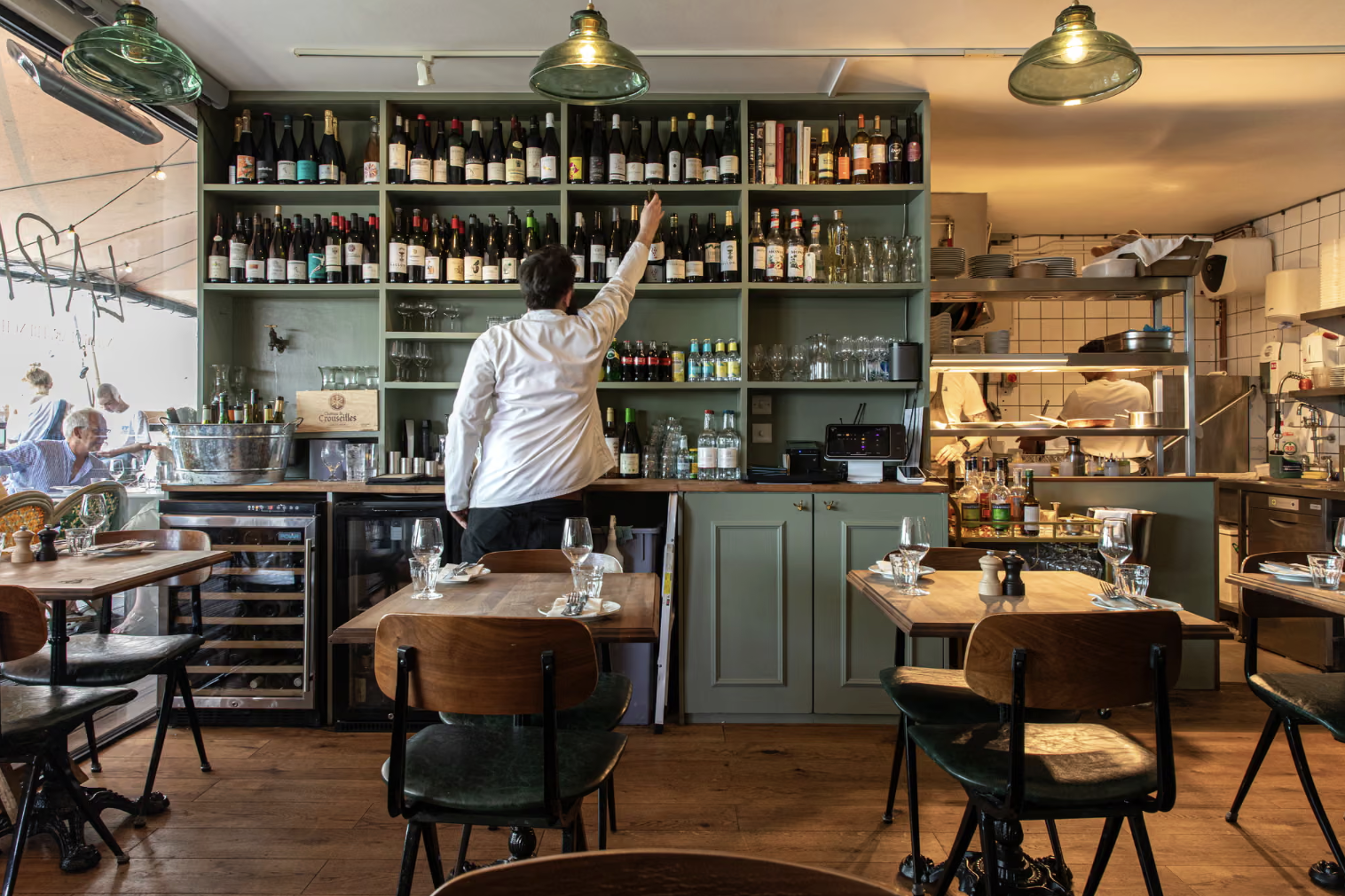
Book at table for lunch (like we had) or dinner HERE and be sure to go hungry!
Other posts you’ll enjoy